Article
What to do after an employee engagement survey:
Turn insight into action
Key takeaways
- An engagement survey is the starting point, not the finish line. What happens afterward has the biggest impact on employee engagement.
- Read survey results like a story, not a scorecard. Look for the workplace experiences behind the numbers.
- Focus on small, team-level changes employees can actually see instead of large organization-wide action plans.
- Measure progress between surveys by watching how conversations, meetings, and everyday work begin to change.
The survey ended. Now what?
The engagement survey closes. HR pulls the data. A thank-you email is sent. Work continues, and no one mentions it again.
But employees notice the silence. When nothing comes, they don’t think leadership is carefully planning; they think leadership moved on. And by the third or fourth survey cycle, they stop expecting follow-through.
According to McLean & Company’s engagement research, “The executive leadership team acts on employee feedback” ranks as the fourth lowest scoring question out of 59 engagement driver statements.
The challenge isn’t collecting the data. It’s closing the gap between what employees shared and what they experience afterward.
The way forward isn’t a year-long transformation plan. It’s understanding where to start, then following through in ways employees can actually feel.
Read the data like a story, not a scorecard
The instinctive way to read an engagement survey is to sort the scores from lowest to highest and start fixing whatever lands at the bottom.
But the lowest score is not always the most important story.
A 3.2 on “communication” might be the number that stands out, but what matters more is the everyday experience creating that score: the Tuesday afternoon when priorities shift for the third time and no one explains why, or the meeting where decisions get made but the reasoning never gets shared.
The same is true with scores that haven’t changed over time. A team that scores a steady 3.8 year after year might look stable, but that flatness often signals something else: people stopped raising concerns because nothing seems to change, or they meet expectations without feeling particularly connected to the work they’re doing.
Quantum Workplace calls this “latent risk”: the danger hiding in flat scores no one thinks to question.
That’s why managers should be part of interpreting the results from the beginning. A dashboard can’t tell you that Thursday’s standing meeting has become everyone’s least productive hour of the week. But a manager usually knows that story already.
A simple starting point: bring managers together for a short conversation. Ask them to identify one employee experience they think sits behind their team’s results. Not a score or a benchmark. An experience. That’s where meaningful action starts.
Communicate before you have all the answers
One of the most common mistakes after an engagement survey is waiting until you have a polished plan before saying anything. The problem with that approach is that silence can feel like indifference.
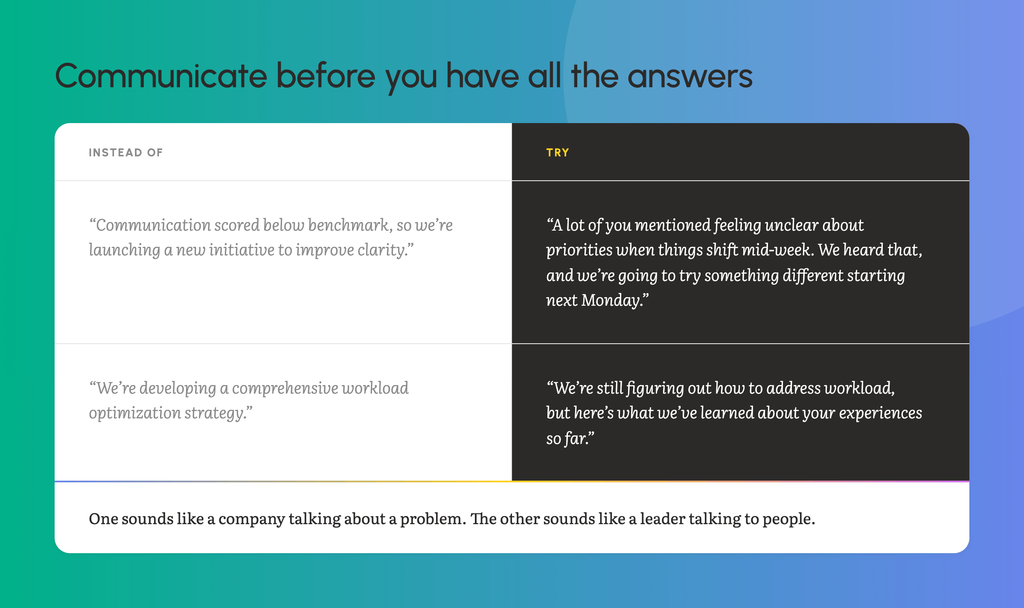
Employees don’t need a finished strategy. They need to know their feedback was heard, what themes stood out, and when they will see the first visible next step.
That might sound something like this:
Act at the team level, not the org chart level
Many organizations turn feedback into a comprehensive action plan. They build it at the company level, assign owners, and set timelines.
The problem: it all happens somewhere employees can’t see it.
People don’t wake up thinking about the company’s engagement strategy. They notice the ordinary moments during the work week: whether their manager remembered what they said in last week’s one-on-one, whether recognition landed on something specific they did, whether a meeting moved work forward or just drained an hour of time.
Those moments matter more than any one-off initiative. Small, consistent interactions often have a bigger impact than company-wide programs employees rarely experience directly. They shape whether work feels supportive, frustrating, energizing, or disconnected.
The better question isn’t: “What should the organization do?” It’s: “What will employees experience differently next week?”
That’s where engagement is built: in the flow of daily work, not in a quarterly review.
Here are a few examples:
- Name one specific contribution in every team meeting. Not “great job, everyone.” Something like, “Priya, the way you restructured that client deck saved us a round of revisions.” People remember being seen.
- Start each one-on-one with a real question. Try: “What’s one thing that made your work harder this week?” You’ll often uncover the same friction points that showed up in the survey, only now you can actually do something about them.
- When priorities shift, explain why before announcing what. Context reduces the frustration of constant change. “We are reprioritizing because the client timeline moved up” lands differently than “Here is the new priority list.”
- If the survey flagged unclear expectations, make priorities visible. Have each manager write down their top three priorities for the team and share them. It takes five minutes and often reveals misalignment no one had named out loud.
If you’re wondering where to begin, here’s a simple 90-day rhythm to keep feedback visible:
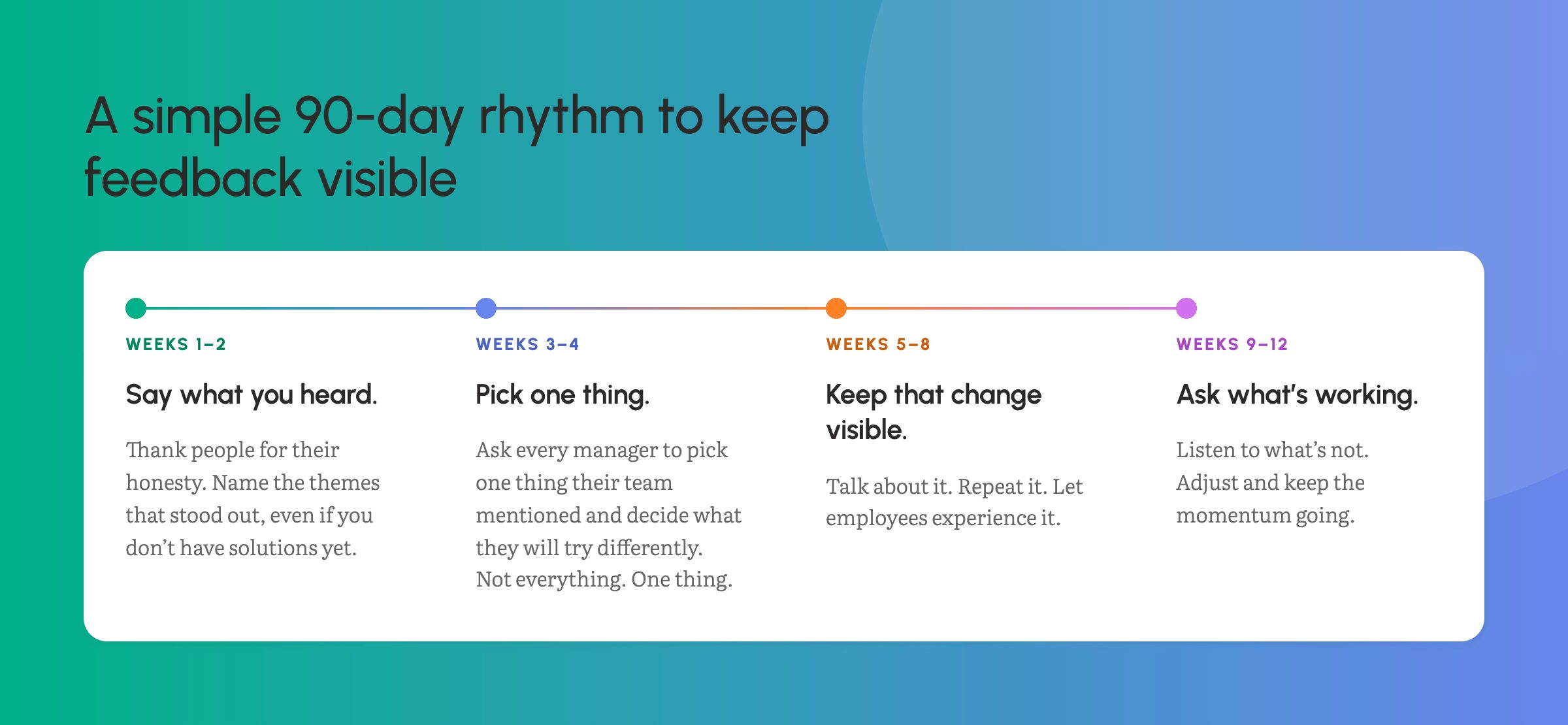
The point isn’t to finish an action plan. It’s to keep feedback in motion long enough for employees to feel the follow-through.
How to know it’s working (without waiting for the next survey)
One of the easiest mistakes to make after an engagement survey is assuming you’ll know whether your efforts worked when the next survey rolls around. But the earliest signs show up in small behaviors long before they show up in scores.
Someone speaks up in a meeting who normally stays quiet. A manager gets asked a question that would have gone unasked three months ago. A team starts naming problems out loud instead of working around them in silence.
Those shifts are easy to miss if you’re only watching dashboards. But they matter more than any percentage point.
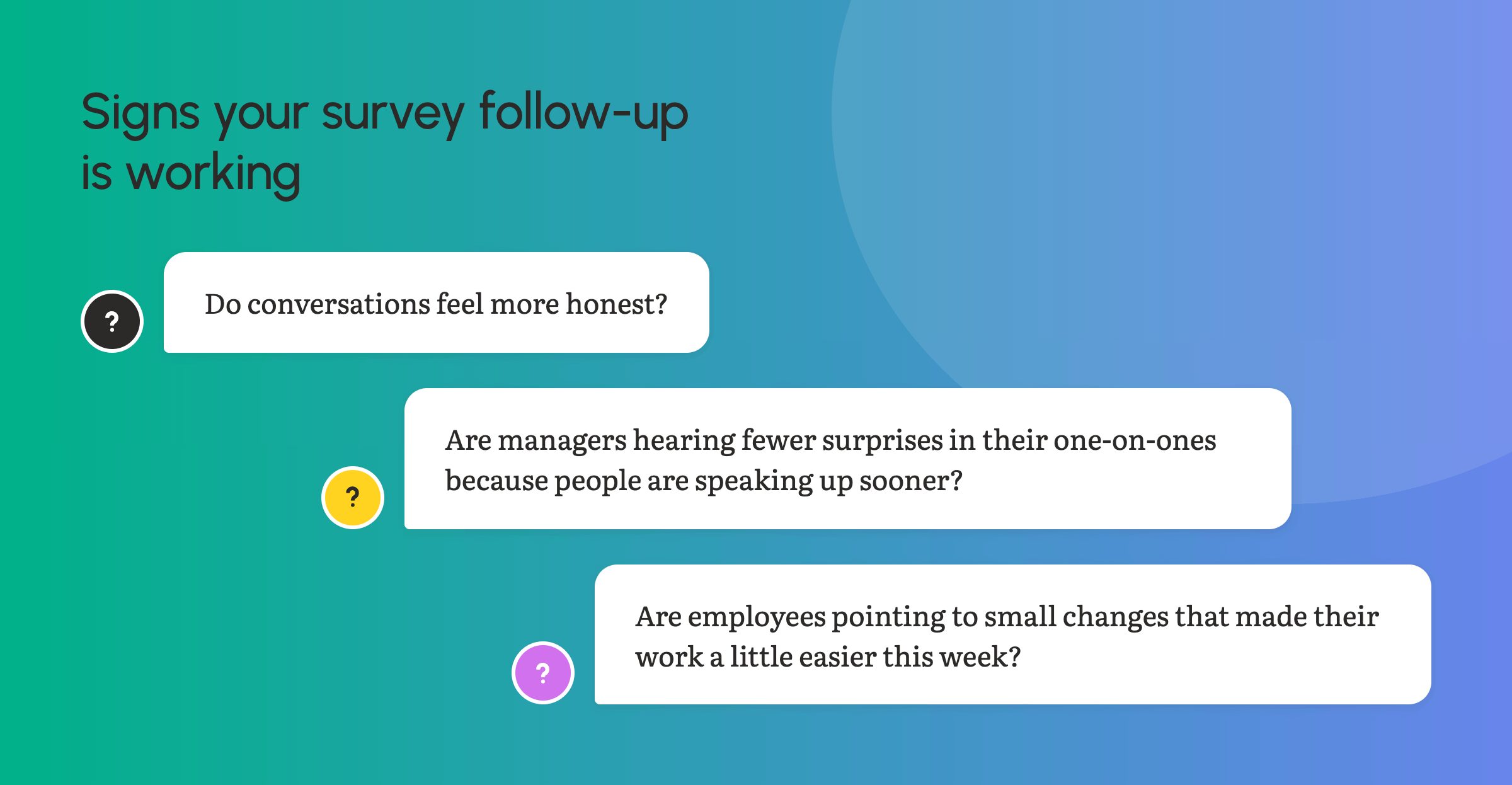
Those are signs of trust building. They tell you people believe their feedback is leading somewhere.
Surveys tell you the score. What happens afterward is what employees remember.
Because engagement isn’t built in the results deck. It’s built in the conversations, habits, and small moments that shape how work feels every day.
Frequently asked questions
How soon should you act on employee engagement survey results?
As soon as you can. You don’t need a finished action plan in the first week, but you do need to acknowledge what you heard. Share the themes that stood out, explain where you’re starting, and make one visible change employees can actually experience. Momentum builds trust. Silence erodes it.
What is an employee engagement action plan?
It’s not a 40-slide deck. It’s a short list of specific things managers will do differently at the team level. Think small behavioral shifts (like naming contributions in every meeting or explaining why priorities changed) instead of launching new programs.
What are common mistakes after an engagement survey?
Trying to solve every problem at once, handing it all to HR, treating it like a project with an end date, and going silent until the next survey. Employees notice when nothing changes, and they remember it longer than any score.
How do you prevent survey fatigue?
Show people their feedback mattered. When employees see their input change how work actually happens, they keep participating. When they don’t, they stop believing the survey was worth their time.